Abstract
Fairness is a crucial property for blockchain systems since it affects the participation: the ones that find the system fair tend to stay or enter, the ones that find the system unfair tend to leave. While current literature mainly focuses on fairness for Bitcoin-like blockchains, little has been done to analyze Tendermint. Tendermint is a blockchain technology that uses a committee-based consensus algorithm, which finds an agreement among a set of block creators (called validators), even if some are malicious. Validators are regularly selected to the committee based on their investments. When a validator does not have enough asset to invest, it can increase it with the help of participants that delegate their assets to the validators (called delegators). In this paper, we implement the default Tendermint model and a Tendermint model for fairness in a multi-agent blockchain simulator where participants are modeled as rational agents who enter or leave the system based on their utility values. We conducted experiments for both models where agents have different investment strategies and with various numbers of delegators. In the light of our experimental evaluation, we observed that while, for both models, the fairness decreases and the system shrinks in the absence of delegators, the fairness increases, and the system expands for the second model in the presence of delegators.
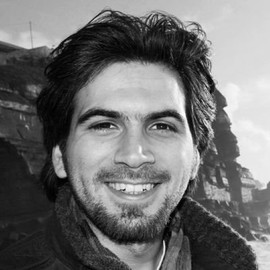
Önder Gürcan
Senior Researcher
My research interests include multi-agent systems, collective intelligence, self-organization and self-adaptation, simulation of biological systems, distributed clock synchronization and behavioural economics.